
No products in the cart.
Return To Shop
Glass vs. Plastic vs. Stainless Steel Food Containers: Which Is Best for What?
Everyone has that one container. The plastic tub stained orange from last month’s curry. The lid that no longer fits anything. The leftovers that somehow taste like garlic three days later.
Choosing food storage looks simple until you’re standing in the kitchen aisle (or scrolling a dozen tabs) wondering whether the material actually matters. It does, but not in the way most guides suggest. No material is best at everything. Glass, plastic and stainless steel each do certain jobs very well and others badly.
This guide covers where each one shines, where it falls short, and how to match the container to the way you actually cook, whether that’s Sunday meal prep, freezing soup, packing lunches or reheating leftovers at your desk.
Plastic and stainless steel: where they shine and where they struggle
Plastic
Plastic is the default for good reason. It’s lightweight, affordable and doesn’t shatter, making it a sensible choice for kids’ lunchboxes, picnics and anything that might be dropped, lost or left on a school bus.
The downsides tend to show up over time. Plastic can stain and hold onto odours, especially when used with tomato sauce, curries and strongly spiced foods. It can also scratch, become cloudy or warp with repeated heating and dishwasher cycles. Microwave suitability varies from product to product, so always check the label before heating.
“BPA-free” is a good baseline to look for, but it only tells you one thing about the material, not everything. If a plastic container becomes cracked, cloudy or warped, it’s time to replace it.
Stainless steel
Stainless steel is the tough, travel-ready option. It’s durable, lightweight and doesn’t stain or pick up odours, so it works well for packed lunches, camping trips and carrying food on the go. The trade-offs are practical ones: you can’t see what’s inside, and it isn’t microwave-safe, so it’s not ideal for anything you plan to reheat in the container. It also usually costs more than plastic.
Why glass is the best all-rounder for home kitchens
Glass doesn’t absorb stains or odours, so a container that held bolognese on Monday is ready for fruit salad on Tuesday. You can also see exactly what’s inside, which matters more than it sounds: when food is visible, it’s easier to remember what you have instead of forgetting about a mystery container pushed to the back of the fridge.
Glass is also one of the most versatile options when it comes to temperature. Many good-quality glass containers can go from the fridge to the microwave and then straight to the table, while some are also oven-safe. Borosilicate glass, in particular, handles temperature changes better than standard glass, which is why it’s popular for food storage and bakeware.
Glass isn’t perfect, and it’s worth being honest about that. It’s heavier than plastic or stainless steel, and it can chip or break if dropped, making it less suitable for toddlers or a bumpy commute. Even borosilicate glass can crack with sudden extreme temperature changes, so don’t move a container straight from the freezer to a hot oven. Let it adjust first.
The lid matters as much as the glass
A glass container is only as good as the seal that keeps it closed. Plastic lids are light and convenient but can stain and warp. Silicone lids are flexible and easy to clean. Bamboo lids add a natural, plastic-free look and feel, but they need a little more care: hand-wash them, dry them thoroughly, and always remove them before microwaving or using the oven.
When you’re comparing glass sets, look for borosilicate glass, a removable silicone seal, and a lid that suits how you cook. These three things can make the difference between a set that lasts for years and one that ends up at the back of a cupboard. Check that the glass body is labelled as dishwasher-, microwave-, freezer- and oven-safe, and make sure the lid is clearly labelled for its own limitations.
Which one should you choose? A quick guide
Here’s how the three compare at a glance:
| Glass | Plastic | Stainless steel | |
|---|---|---|---|
| Microwave | Yes, if labelled microwave-safe | Check the label | No |
| Oven | Yes, if the glass body is oven-safe | No | Check the label |
| Freezer | Yes, if freezer-safe; leave room for expansion | Yes, if freezer-safe | Yes, if suitable for freezing |
| Stains and odours | Rarely | More likely | Rarely |
| Weight | Heavy | Light | Light |
| Lifespan | Long | Short to medium | Long |
| Best for | Meal prep, home use | Kids, short-term storage | Travel, lunchboxes |
And by situation:
- Weekly meal prep: Glass. It can go from storage to reheating in the same container, when labelled for both uses.
- Kids’ lunchboxes: Plastic or stainless steel. They’re lightweight and more resistant to drops than glass.
- Freezing soups and sauces: Glass, as long as the container is freezer-safe and you leave enough room for the food to expand.
- Reheating lunch at work: Glass, if you don’t mind the extra weight.
- Camping and outdoors: Stainless steel.
- Dry goods in the pantry: Glass, so you can easily see what you have and what’s running low.
Most kitchens end up with a mix: glass at home, plastic or steel for the school bag and the backpack. That’s perfectly fine.
Ready to switch your meal prep to glass?
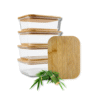
If glass sounds right for your kitchen, a set like our 4-piece borosilicate glass containers with bamboo lids (1040 ml) is built for weekly meal prep. The glass body is dishwasher safe (top rack), microwave and freezer safe, and oven safe up to 180°C with the lid removed. The silicone seal comes out for easy cleaning, and the whole set is BPA-free and plastic-free.

About author



Add comment